Why a Repeated Detail Makes an Outfit Feel Deliberate
A repeated detail makes an outfit feel deliberate without a matching set: learn when to echo colour, shape or texture, and when to leave a look alone.
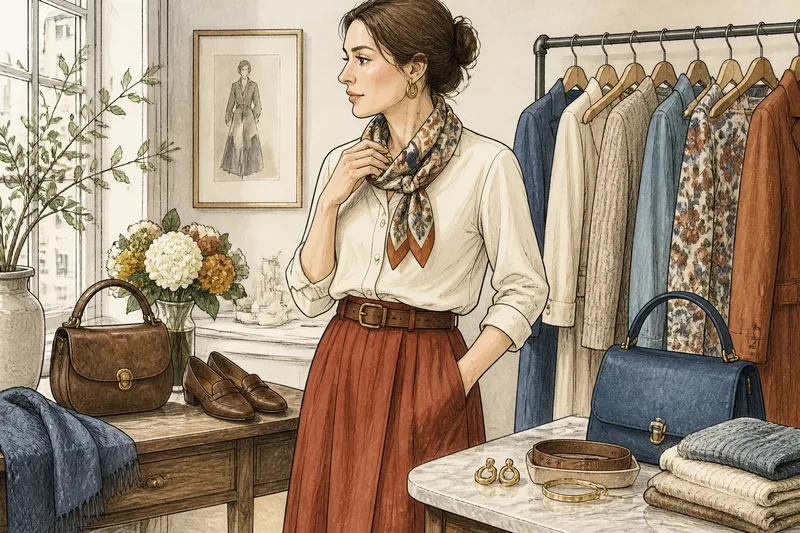
The common mistake with a repeated detail is to match everything too closely: the same shade, finish and scale from head to toe. Instead of making an outfit feel deliberate, that can make it look assembled from a display. A quieter echo—a colour in two separate pieces, a curved shape repeated once, or a material that appears in more than one place—gives the eye a route through the clothes without demanding a matching set.
The useful question is not simply what to repeat, but what the outfit needs. A busy print may need a calm colour echo; a plain combination may welcome a small shift in shape. Choose the detail according to the situation, then let the rest of the outfit do its own work.
What should you repeat when the outfit already has a print?
With a printed skirt, shirt or scarf, repeat one colour already present in the pattern. A soft blue thread in a patterned blouse might reappear in plain trousers, a bag or a pair of shoes. The second item does not need to match the print exactly. Its job is to make one colour feel intentional rather than accidental.
This works particularly well when the print has several colours and you want to keep the outfit from feeling scattered. Choose a colour that is visible but not dominant. If the print is high-contrast, pick a quieter shade from it; if it is muted, a deeper colour can provide a more distinct echo.
Avoid repeating every colour in a print. That turns a useful link into a matching exercise, and the outfit loses some of its ease. One echo is usually enough; a second can work if it is small and not placed beside the first.
When does a plain outfit need a repeated shape?
When the colours are already calm, use shape to create continuity. A rounded collar might sit comfortably with a curved bag clasp or a softly rounded toe. A sharp, straight-edged jacket could be echoed by the rectangular lines of a structured bag. These details need not be identical: a resemblance in outline is enough.
Shape is a useful choice for an outfit built from neutrals, especially when adding another colour would make it busier than you want. It can also help pieces from different sources feel as though they belong together. Look at the outline of the garment and its visible details, rather than adding a motif simply because it is available.
Keep the scale in mind. A small circular button and a large round bag may share a shape but compete for attention. If one curved element is already prominent, repeat the curve in a discreet place, such as a buckle or earring, rather than adding another large feature.
Is material the better echo for a relaxed outfit?
Often, yes. Repeating a material can connect pieces without making them look coordinated. A leather belt might relate to leather shoes, while a knitted top and a knitted hat share texture without sharing colour or pattern. The relationship is especially persuasive when the materials have different jobs and sit apart on the body.
Texture can soften an outfit that feels too flat. A smooth cotton shirt beside a nubby cardigan has contrast; a small wool detail elsewhere can make that contrast feel considered. For a more polished combination, similar finishes—such as two matte surfaces—can create continuity without adding shine or visual noise.
Do not treat every material match as an invitation to add more. If a leather bag and shoes already make a clear pair, a third leather accessory may feel more like a uniform than a useful echo. The point is connection, not coverage.
Which detail fits the occasion and the pieces you own?
For a work outfit with a strong jacket, repeat a quiet colour or a clean shape. A patterned scarf may already carry enough interest; matching it with another patterned accessory can crowd the jacket. A restrained echo in a plain bag or shoe keeps the outfit composed while leaving the jacket in charge.
For a casual combination, material often feels more natural. Denim with a soft blue detail elsewhere, or a canvas bag that picks up the texture of a cotton layer, can connect pieces without looking formal. If the clothes are already relaxed and tactile, adding a precise colour match may feel fussier than the occasion requires.
For an event where you want a sharper finish, colour can provide a clear thread. Repeat a shade from a dress in a small accessory, or let a coloured jacket connect to the trim on a bag. Keep the link small enough that the outfit still reads as separate pieces rather than a set.
Also consider what is already doing the talking. If a coat has an unusual cut, let that lead and use a subtle material echo. If the outfit is simple, a repeated shape can supply interest without relying on extra colour. Choose the detail that supports the strongest piece, not the one that competes with it.
How can you tell whether the echo is too obvious?
Stand back and notice where your eye lands. If it jumps between two matching items and ignores the rest of the outfit, the link may be too strong or too close together. If one item feels unrelated, a small echo elsewhere could help. The aim is a route across the look, not a pair of matching targets.
Say you are wearing a rust-coloured skirt, a cream shirt and a printed scarf with a little rust in it. Adding rust-coloured shoes as well might make the matching feel emphatic. Imagine instead choosing a plain brown belt: the earthy material sits comfortably with the skirt, while the scarf provides the colour echo. The expected visible effect is a gentle connection between the pieces, with the print still distinct.
When dressing, try the outfit with the repeated detail and then without it. If removing the detail makes the pieces feel disconnected, keep it. If the outfit looks calmer and more balanced without it, let it go. This is a visual decision, not a rule that every outfit needs a recurring motif.
What do readers often ask about a repeated detail?
Does a repeated colour have to match exactly?
No. A related shade can be more relaxed than an exact match, especially when the pieces differ in fabric or finish. Aim for a recognisable family resemblance rather than identical colour chips.
Can you repeat a detail in accessories only?
Yes. A bag and shoes can share a material, or a scarf and earrings can echo a colour, while the clothes remain simple. Keep the accessories from becoming a matching set by varying their shape or scale.
How many times should one detail appear?
Two appearances are usually enough to make the connection legible. A third can work when one instance is subtle, such as a small button, but repeated accents should not crowd the outfit.
What if the clothes have no obvious detail in common?
Start with the simplest shared quality: a colour, a soft or crisp texture, or a rounded or angular outline. If nothing feels natural to echo, the pieces may be better left unlinked; contrast can be deliberate too.
What is not worth the effort?
There is little value in hunting for an exact shade across several shops or replacing useful pieces because their finishes do not match perfectly. Indoor and outdoor light can make the same colour look different, and fabric changes how a shade reads. Use what is already in the wardrobe, and trust a clear visual resemblance over a fussy attempt at precision.
A repeated detail makes an outfit feel deliberate when it gives separate pieces a shared note while preserving their differences. For a print, borrow a colour; for calm clothes, consider shape; for a relaxed mix, try material. If the echo catches the eye before the clothes do, remove one instance. The best link is often the one a viewer senses before they can name it.