A Written Invitation or a Message: Choosing the Form for a Gathering
Choose a written invitation or message for a gathering by matching tone, practical details and the kind of reply you need to the occasion.
The common mistake with a written invitation or message for a gathering is choosing whichever is quickest, then asking that format to do a job it handles badly. A vague group text can make a formal dinner feel casual; a beautifully printed card can leave guests unsure how to confirm. The choice shapes the tone, the useful information and the easiest route to a reply.
Say you are planning an invented gathering: an early-autumn supper for a small circle of friends, with a long table, a borrowed dining room and a menu that needs advance notice of dietary requirements. You want it to feel considered, not ceremonious. The decisions below show how to choose a form without letting stationery or an app make the occasion feel like someone else’s.
What should the invitation make guests feel?
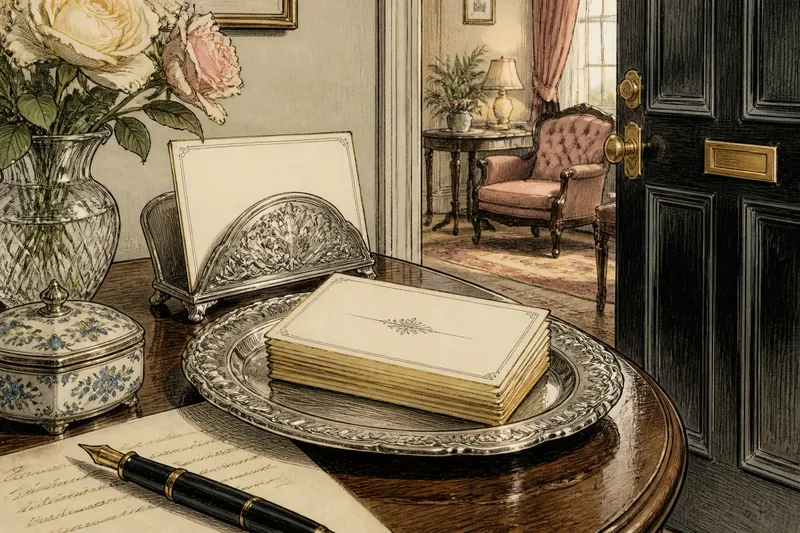
Start with the feeling you want to establish before anyone arrives. A folded card, addressed by hand and delivered through the post, gives an invitation a little ceremony. It asks the guest to pause, read and keep the details somewhere visible. That suits occasions where the invitation itself is part of the welcome: a milestone birthday, a wedding reception or a supper with a deliberately formal mood.
A direct message feels immediate and conversational. It is often a natural fit for a spontaneous drinks evening or a relaxed meal among people who already share a group chat. A message does not make an occasion inherently informal, though. Clear wording, a personal greeting and a well-presented digital invitation can give it warmth and shape.
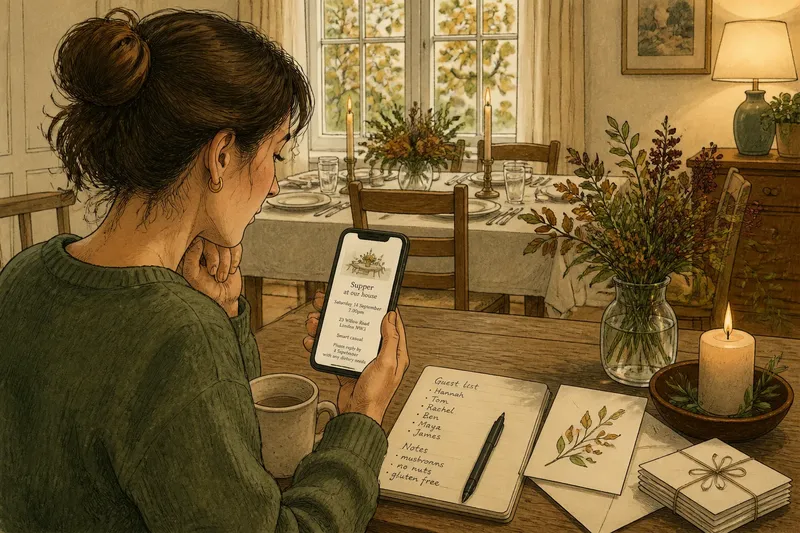
For the supper, the host settles on a tone that is warm but intentional. A short digital invitation can carry that balance if it names the occasion plainly and avoids sounding like a last-minute headcount. The format should support the atmosphere, not impersonate a grander event.
Which format carries the details cleanly?
Every invitation needs to answer the questions a guest will actually have: what is happening, when, where, what kind of dress is comfortable, and how to respond. Add only the details that affect the visit. A long note about the menu can obscure the address; a card with no reply method may look polished but leave the host chasing answers.
Digital invitations make changes easier to share. A map link, a note about a building entrance or an updated arrival time can sit in the same thread as the invitation. That is useful when details are likely to shift, or when guests may need to check information on the way. The trade-off is that a message can disappear among work chats and delivery alerts.
Printed invitations are easy to display on a mantel or pinboard, and their physical presence can make the date feel settled. But they are less convenient if the venue changes or a detail needs correcting. If the gathering requires several practical notes, a card can carry the invitation while a separate, clearly named message supplies later updates.
For the invented supper, the host sends a digital invitation with the date, start time, full address, a simple clothing cue and a request to mention dietary needs. A map link sits beneath the address rather than replacing it. Guests can read the essentials without opening another service, and the host has a clear way to collect replies.
How should guests be asked to reply?
The format should make the response easy and specific. “Let me know” leaves open what to report and by when. Ask for a clear answer, and say what information would help. If the guest list is small, an individual reply can feel more considerate than a public response in a group thread.
A reply card or a separate note works well when guests might not use the same digital service, or when a formal event calls for a more traditional exchange. A direct message is often simpler for a casual gathering. For a larger group, a response form can collect attendance and relevant meal information in one place, provided it does not ask for unnecessary personal details.
In the supper scenario, the host asks each guest to reply privately by a stated date and include any dietary needs. This keeps the social group chat from becoming a roll-call, while giving the host information in a usable form. The invitation is still personal; the response request is simply unambiguous.
What can go wrong with each choice?
A group message can expose replies to everyone, prompt side conversations and make it difficult to tell who has answered. A private message avoids that clutter, but can leave the host managing several separate threads. A dedicated invitation service may organise responses neatly, though some guests may find a new sign-in or app an unnecessary hurdle.
Paper has different snags. The address may be out of date, a guest may be away, or a card may arrive after the date has been forgotten. A printed invitation also offers little room for a quick correction. Choose the medium with the guest list in mind, not only the picture of the event you have in your head.
For the hypothetical supper, imagine one guest rarely checks social media but regularly reads email. The host sends the same invitation individually by email rather than assuming a shared platform will reach everyone. The observable result is straightforward: the guest can respond through a familiar channel, and the host does not need to turn a simple invitation into a tech support request.
What is not worth the effort? Sending the same invitation as a card, email, text and group post “just in case”. Multiple versions can create uncertainty about which details are current. Choose a main channel, then use a brief follow-up only when someone needs a different route or the information changes.
Which questions help settle the choice?
Is a text message too casual for a dinner party?
Not necessarily. A personal greeting, a clear description of the evening and complete details can make a message feel thoughtful. If the dinner is intentionally formal, a card may better signal that mood before guests arrive.
Should a host use a group chat for an invitation?
A group chat can suit friends who already use it comfortably and do not mind seeing one another’s replies. For a mixed guest list or private attendance details, individual messages or a separate response form can be more considerate.
When is a printed invitation more useful?
Choose paper when the invitation’s physical presence adds meaning or when guests are more likely to keep a card somewhere visible. It is less convenient for late changes, so keep the essential information accurate and use a direct follow-up if plans shift.
What should a digital invitation include?
Include the occasion, date, time, full location, useful arrival or dress guidance and a straightforward way to reply. Add links only when they help, and make sure the invitation still makes sense if a guest reads it without opening them.
What does the supper invitation teach?
The invented supper ends with a digital invitation that feels personal because its wording and response request are carefully chosen, not because the host has decorated it with extra features. The format handles the address, dietary reply and possible follow-up neatly; a printed card would have made more sense if the host wanted the object itself to mark the occasion.
For a written invitation or message for a gathering, decide first what guests should understand and how you want them to answer. Then choose the channel that makes those things easiest for this particular group. A good invitation leaves guests looking forward to the gathering, not wondering where to find the time, what to wear or whether their reply went through.